

How To Install Vcenter 6.5 On Windows Server 2012
VMware vSphere 6.5 is scheduled to attain end of general support xv October 2022, referenced in the VMware Lifecycle Matrix. See as well How to Install vSphere 7.0. Upgrade to vSphere 7 tin can be achieved directly from vSphere vi.five.0 and above, whereas vSphere 6.0 requires an intermediate upgrade to 6.5 or 6.seven outset. For more information meet the VMware Upgrade Matrix. Finally, the Windows vCenter Server is at present depreciated and non available with vSphere 7.0.
VMware vCenter Server pools ESXi host resources to provide a rich characteristic ready delivering high availability and error tolerance to virtual machines. The vCenter Server is a centralised management application and tin be deployed as a virtual appliance or Windows motorcar. This mail gives a walk through on a clean installation of vCenter Server half dozen.five on Windows Server 2016. vCenter six.5: Download | Release Notes| What's New | Upgrading to vCenter Server 6.v Update 1.

Software Considerations
- The operating organization should be 64 fleck and Windows Server 2008 SP2 or above.
- For environments with up to 20 hosts and 200 VMs the arranged internal Postgres database can be used.
- An external database should be Microsoft SQL Server 2008 R2 SP2 or above, or Oracle 11g or 12c. You can review a full listing of compatible versions at the Database Interoperability Matrix.
- You must check compatibility of whatsoever third political party products and plugins that might exist used for backups, anti-virus, monitoring, etc. as these may demand upgrading for vSphere vi.5 compatibility.
- Any hosts yous program on connecting to vCenter six.5 should be running version 5.5 or above.
- To check version compatibility with other VMware products encounter the Product Interoperability Matrix.
Architectural Considerations
- From vSphere six onwards the Platform Services Controller (PSC) was introduced to the vSphere compages. The PSC contains infrastructure services such as Single Sign On, Document Authority, licensing, etc. The PSC is deployed internally with vCenter Server or as an external component.
- You can read more almost the PSC in this kb.
- When implementing a new vSphere half dozen.5 environment y'all should program your topology in accordance with the VMware vCenter Server and PSC Deployment Types. Larger environments may crave an external PSC.
- For more information on deploying an external PSC come across the Deploying an External PSC postal service.
- Most deployments will include the vCenter Server and PSC in ane appliance, following the embedded deployment model, which I volition use in this guide.

Hardware Considerations
- Windows vCenter Server with embedded PSC requires the following hardware resources:
- Tiny (upwards to x hosts, 100 VMs) – ii CPUs, x GB RAM.
- Small-scale (up to 100 hosts, 1000 VMs) – iv CPUs, 16 GB RAM.
- Medium (up to 400 hosts, 4000 VMs) – 8 CPUs, 24 GB RAM.
- Large (upwardly to 1000 hosts, 10,000 VMs) – 16 CPUs, 32 GB RAM.
- Ten-Large (upward to 2000 hosts, 35,000 VMs) – 24 CPUs, 48 GB RAM – new to v6.5.
- Where the PSC is deployed on a dissever machine this requires ii CPUs, 4 GB RAM.
- Environments with ESXi host(s) with more than 512 LUNs and 2048 paths should be sized large or x-big.
- The Windows vCenter Server requires the following free disk infinite for installation: (the first ii may not necessarily be the system bulldoze depending on installation location) Programme Files 6 GB, Program Data 8 GB, Arrangement folder 3 GB. The PSC machine requires; Program Files one GB, Programme Data 2 GB, System folder one GB.
- A Windows based vCenter Server tin can be installed on either a physical or virtual automobile.
Other Considerations
- It may exist necessary to temporarily cease any third party software which could interfere with the installer, such as anti-virus scanner (see post vCenter half dozen Upgrade Internal Error).
- If the vCenter Server services are running equally a user other than the Local System account then the user must be a member of the administrators group and have the following permissions; log on as a service, human activity as part of the operating organisation (if a domain user).
- The account used for external database hallmark requires Oracle DBA role, or SQL sysadmin server role, or db_owner fixed database part. For a full list of explicit DB permissions meet the Database Permission Requirements document.
- All vSphere components should be configured to utilise an NTP server.
- FQDN resolution should be in identify when deploying vCenter Server.
- Review the listing of Required Ports for vCenter Server and PSC.
- Official resource – vSphere 6.5 Documentation Centre, vSphere 6.5 Release Notes.
- Read the Important data before upgrading to vSphere half dozen.5 KB.
Create Data Source
Before offset if you intend to use vCenter Server with an external SQL database be certain to install the SQL Server Native Client v10 or v11.
You must also configure a 64-flake ODBC data source for external databases. ODBC Data Source Administrator can be accessed via Control Panel > Administrative Tools. Click Organisation DNS, Add together and input the details for the external database, examination the information source before continuing. If you are using the internal Postgres database then the System DSN is added automatically during installation.

Installation
Download the VMware vCenter Server and Modules for Windows ISO from VMware downloads: v6.5.0 | v6.v.0 U1.
Mount the ISO and right click autorun.exe, select Run every bit administrator. The VMware vCenter Installer will open up. Ensure vCenter Server for Windows is selected and click Install.
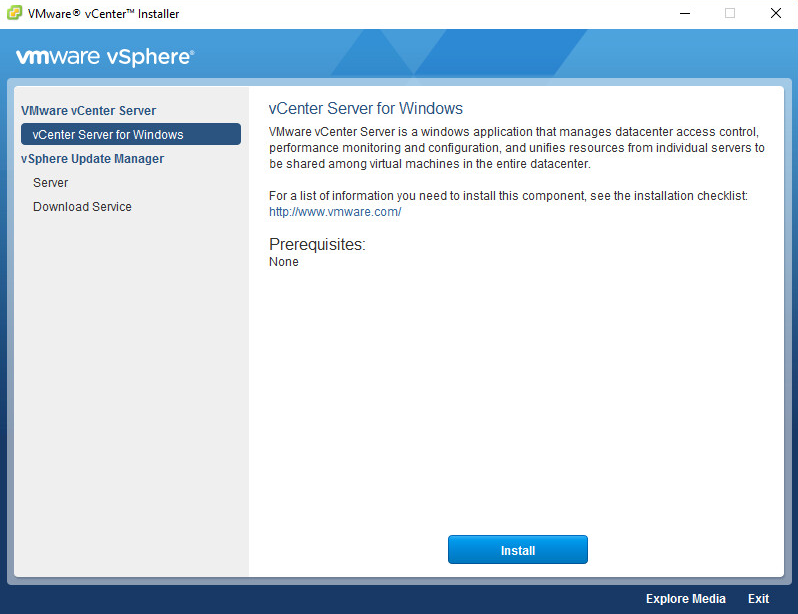
The vCenter Server 6.5 Installer volition open in a separate window, click Adjacent.

Accept the finish user license agreement and click Next.

In this guide we will be using an embedded deployment model. If yous are using an external deployment model the PSC component must be installed start earlier the vCenter. Select the deployment blazon and click Next. If the Windows server does not have sufficient resources allocated the installer will error at this stage.
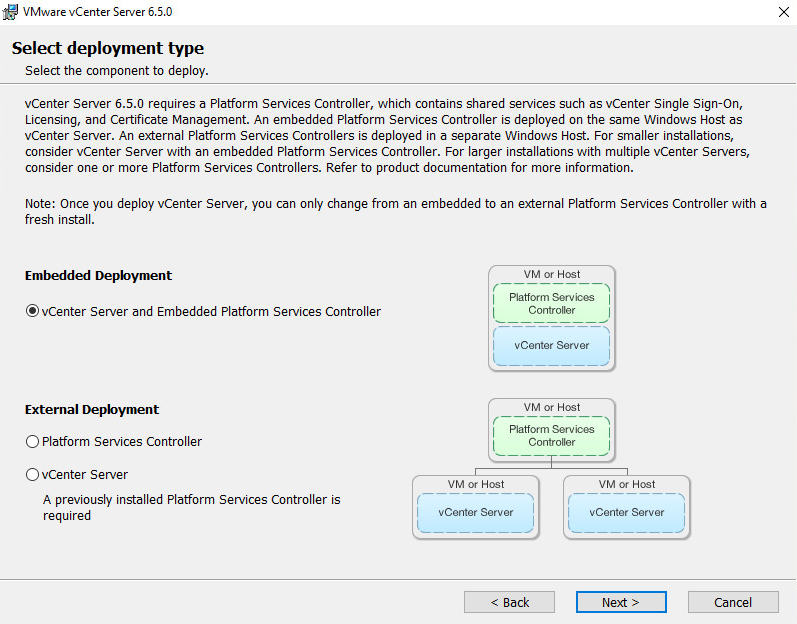
Enter the FQDN in the System Name field and click Next.
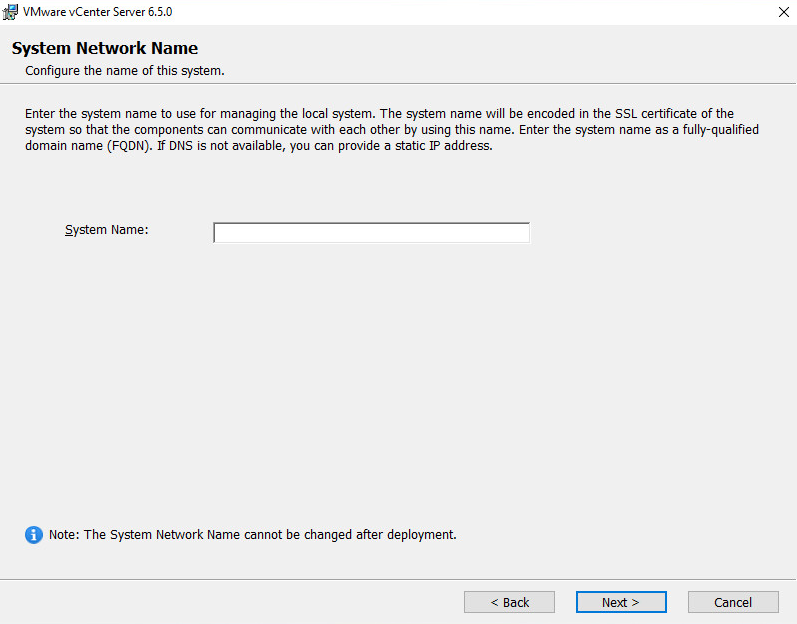
Create a new Unmarried Sign-On domain, or join the vCenter to an existing SSO domain. If you are creating a new SSO domain give this a meaningful name, (not the same as your Active Directory name) the default is vsphere.local. Configure a password for the SSO administrator account and a vCenter specific site proper noun, click Side by side.
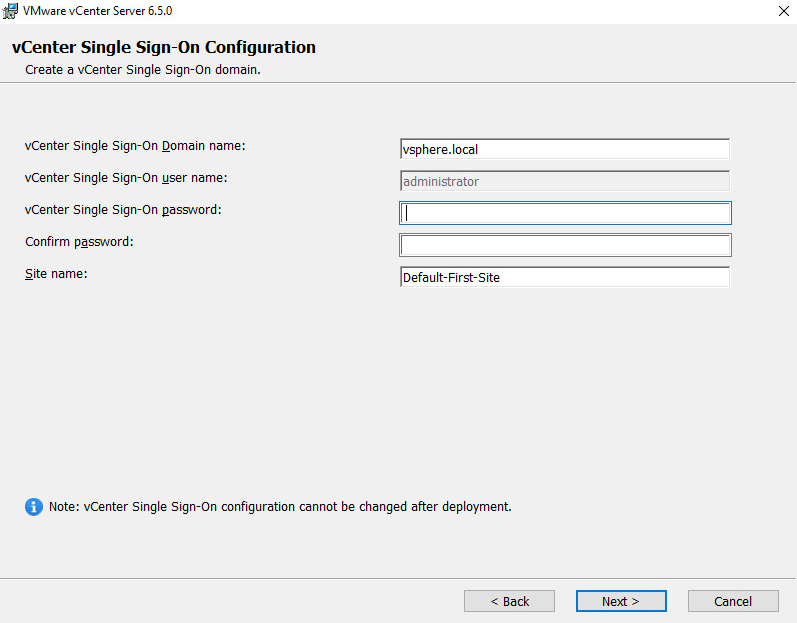
Select whether to run vCenter services as the local organization account or enter details of a service account and click Adjacent. Ensure the account running vCenter services has been granted permissions as per the other considerations section of this guide.

Select an embedded Postgre database or point the installer to the DSN for an external database, click Next.

Accept the default port configuration and click Side by side.
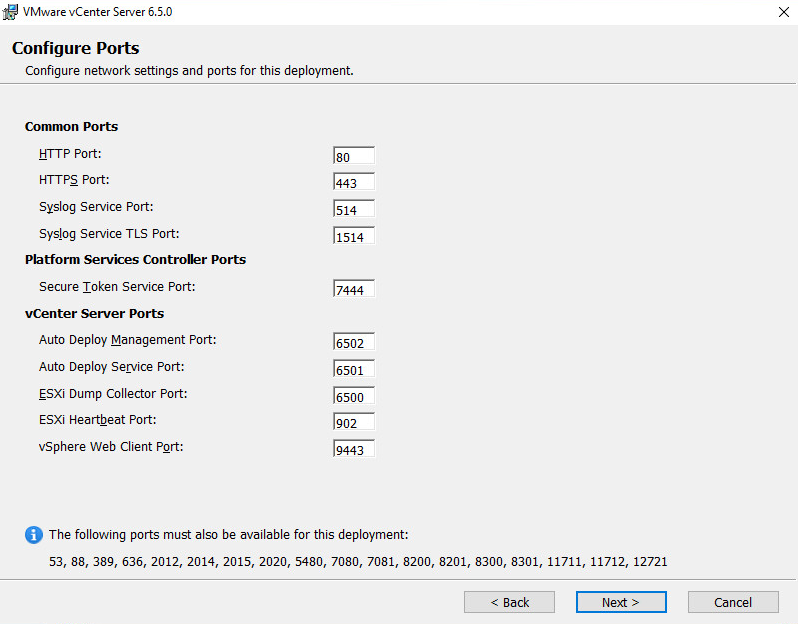
Select the directory to install vCenter services and click Side by side.

Tick or untick the VMware Customer Experience Comeback Plan as advisable and click Next.

Check the configuration on the review page and click Install to begin the installation process.

Once the installation has completed click Finish.

Post-Installation
Connect to the vCenter post install using the IP or FQDN of the vCenter. Access vSphere by clicking either the vSphere Web Client (Flash) or the vSphere Client (HTML5). Connect to the vSphere Web Client to manage your system, the thick client (Windows) is no longer supported.
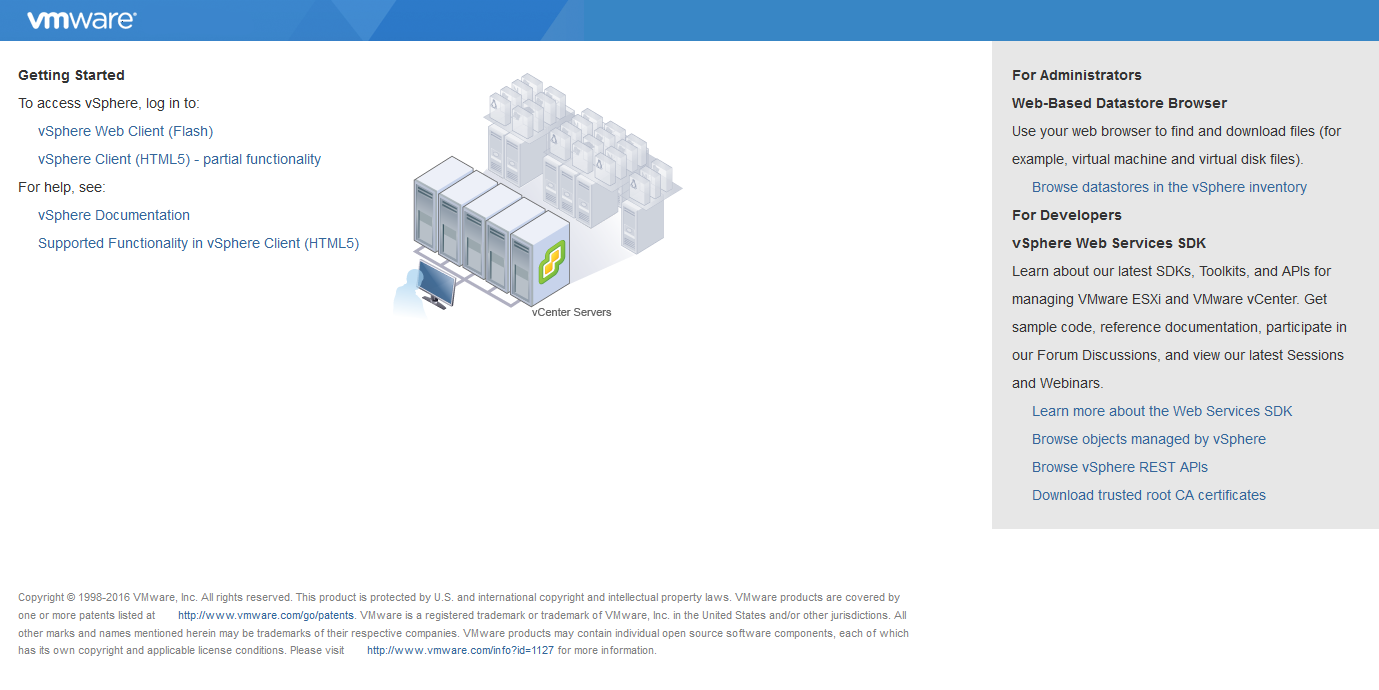
Log in to the vSphere Web Client using the SSO ambassador login. Verify the installed version is right nether the Summary tab when selecting the vCenter, you can also go to Aid > Near.
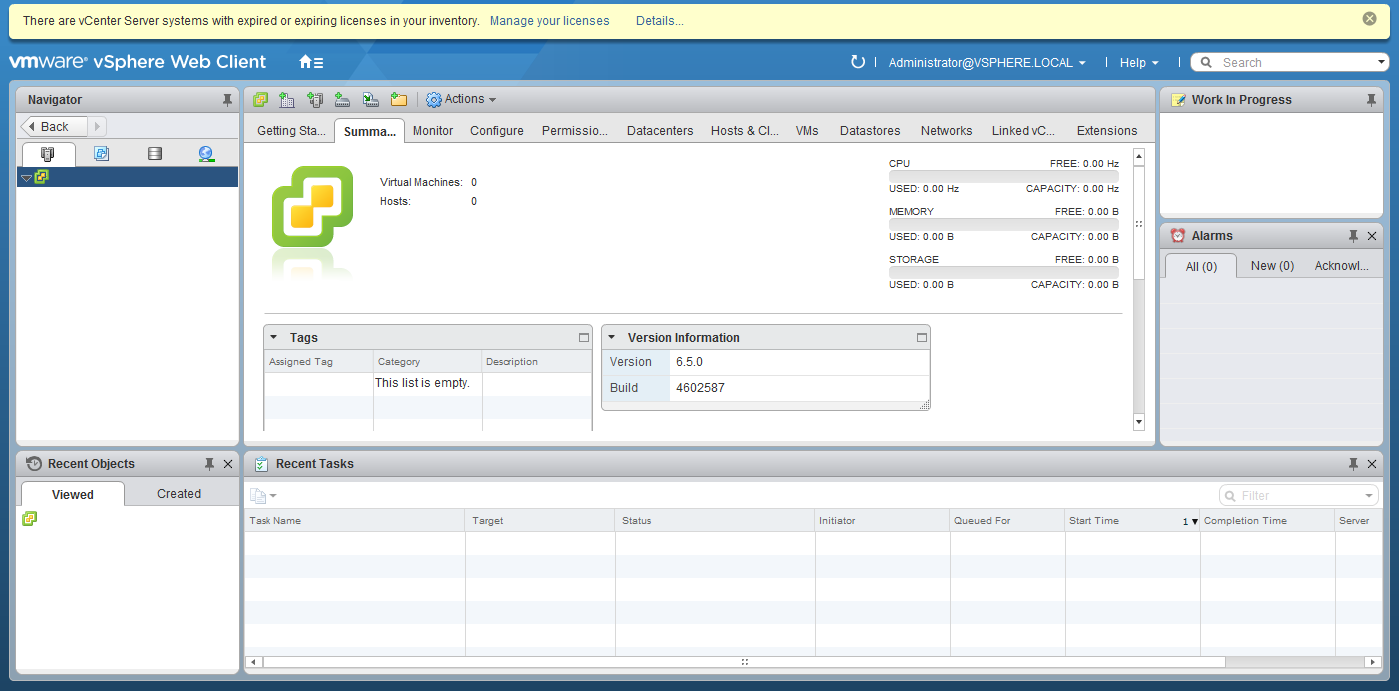
You must utilise a new vCenter license key within threescore days. From the Hosts and Clusters view select the vCenter Server. Click Deportment and Assign License. Select a license or use the light-green plus button to add a new license and click Ok.
You can obtain a threescore twenty-four hours trial license for vCenter Server hither. If you have purchased vCenter Server and then log into your licensing portal here. If the license cardinal does not appear and then cheque with your VMware account manager.
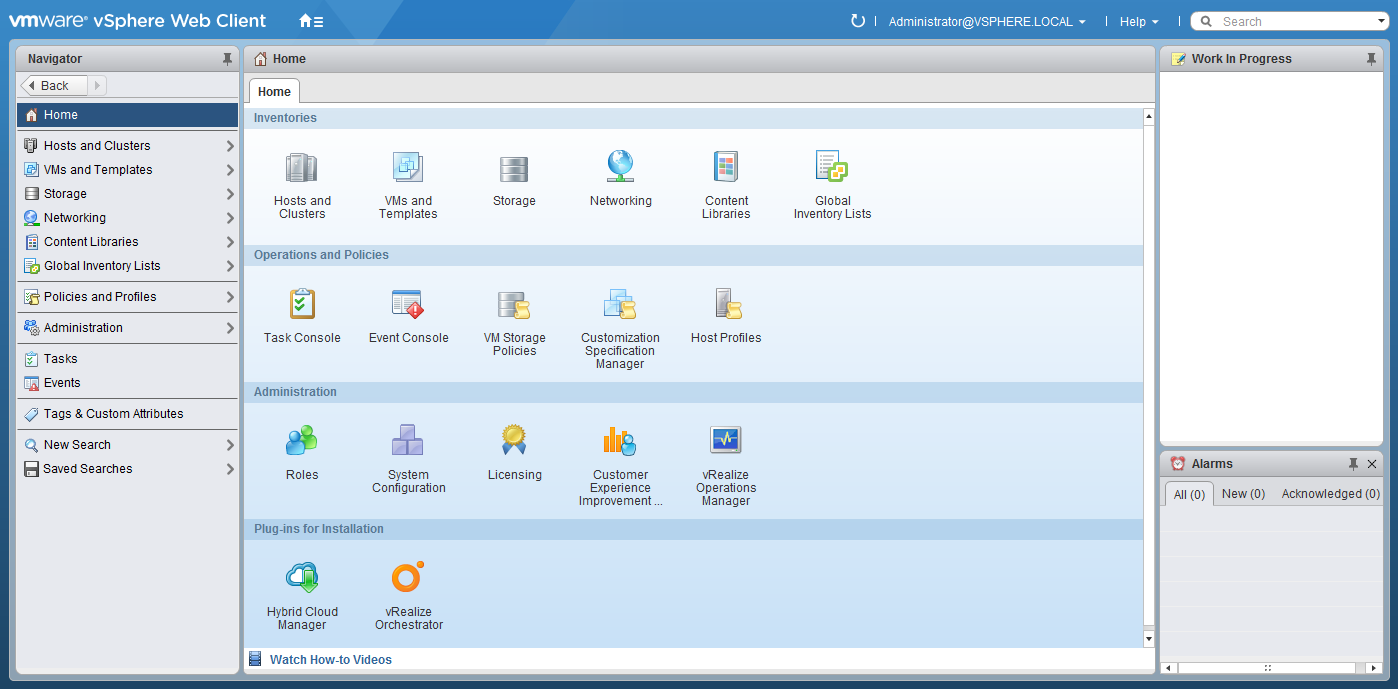
If you have an Agile Directory domain and so vCenter tin can use this as a source for permissions and sign on credentials. Kickoff join the vCenter to the domain; from the home page click Organisation Configuration, Nodes, and select the vCenter server. In the Active Directory section of the Manage tab click Join, input your Advert details and click Ok. Reboot the appliance either right clicking the vCenter server under Nodes and selecting Reboot.
When the vCenter server comes dorsum online we can add AD every bit an identity source; from the home folio click Assistants, under Single Sign-On select Configuration. Ensure the Identity Sources tab is open and click the green plus symbol to add a source. Make full in the Agile Directory details for your domain and click Ok.

You can now add permissions to vCenter objects such as datacentres, clusters, folders, individual virtual machines, etc. for Active Directory users and groups past selecting the object and clicking Permissions under the Manage tab. To learn more than about how vSphere permissions work review the vSphere permissions documentation section.
Source: https://esxsi.com/2016/11/16/vcenter6-5/
Posted by: brunsonthadders1937.blogspot.com
0 Response to "How To Install Vcenter 6.5 On Windows Server 2012"
Post a Comment